Category Archives: Laugh out loud
Laughter is the best medicine.
Perception VS reality
Let’s say a guy named Roger is attracted to a woman named Elaine.
He asks her out to a movie; she accepts; they have a pretty good time. A few nights later he asks her out to dinner, and again they enjoy themselves. They continue to see each other regularly, and after a while neither one of them is seeing anybody else.
And then, one evening when they’re driving home, a thought occurs to Elaine, and, without really thinking, she says it aloud: ”Do you realize that, as of tonight, we’ve been seeing each other for exactly six months?”
And then there is silence in the car. To Elaine, it seems like a very loud silence. She thinks to herself: Gee, I wonder if it bothers him that I said that. Maybe he’s been feeling confined by our relationship; maybe he thinks I’m trying to push him into some kind of obligation that he doesn’t want, or isn’t sure of.
And Roger is thinking: Gosh. Six months.
And Elaine is thinking: But, hey, I’m not so sure I want this kind of relationship, either. Sometimes I wish I had a little more space, so I’d have time to think about whether I really want us to keep going the way we are, moving steadily toward … I mean, where are we going? Are we just going to keep seeing each other at this level of intimacy? Are we heading toward marriage? Toward children? Toward a lifetime together? Am I ready for that level of commitment? Do I really even know this person?
And Roger is thinking: . . . so that means it was . . . let’s see. … February when we started going out, which was right after I had the car at the dealer’s, which means . . . lemme check the odometer . . . Whoa! I am way overdue for an oil change here.
And Elaine is thinking: He’s upset. I can see it on his face. Maybe I’m reading this completely wrong. Maybe he wants more from our relationship, more intimacy, more commitment; maybe he has sensed — even before I sensed it — that I was feeling some reservations. Yes, I bet that’s it. That’s why he’s so reluctant to say anything about his own feelings. He’s afraid of being rejected.
And Roger is thinking: And I’m gonna have them look at the transmission again. I don’t care what those morons say, it’s still not shifting right. And they better not try to blame it on the cold weather this time. What cold weather? It’s 87 degrees out, and this thing is shifting like a garbage truck, and I paid those incompetent thieves $600.
And Elaine is thinking: He’s angry. And I don’t blame him. I’d be angry, too. I feel so guilty, putting him through this, but I can’t help the way I feel. I’m just not sure.
And Roger is thinking: They’ll probably say it’s only a 90-day warranty. That’s exactly what they’re gonna say, the rats.
And Elaine is thinking: maybe I’m just too idealistic, waiting for a knight to come riding up on his white horse, when I’m sitting right next to a perfectly good person, a person I enjoy being with, a person I truly do care about, a person who seems to truly care about me. A person who is in pain because of my self-centered, schoolgirl romantic fantasy.
And Roger is thinking: Warranty? They want a warranty? I’ll give them a warranty. I’ll take their warranty and stick it right up their ….
“Roger,” Elaine says aloud. “What?” says Roger, startled.
“Please don’t torture yourself like this,” she says, her eyes beginning to brim with tears. “Maybe I should never have . . . I feel so . . .” (She breaks down, sobbing.)
“What?” says Roger.
“I’m such a fool,” Elaine sobs. “I mean, I know there’s no knight. I really know that. It’s silly. There’s no knight, and there’s no horse.”
“There’s no horse?” says Roger.
“You think I’m a fool, don’t you?” Elaine says.
“No!” says Roger, glad to finally know the correct answer.
“It’s just that . . . It’s that I . . . I need some time,” Elaine says.
(There is a 15-second pause while Roger, thinking as fast as he can, tries to come up with a safe response. Finally he comes up with one that he thinks might work.)
“Yes,” he says.
(Elaine, deeply moved, touches his hand.)
“Oh, Roger, do you really feel that way?” she says.
“What way?” says Roger.
“That way about time,” says Elaine.
“Oh,” says Roger. “Yes.”
(Elaine turns to face him and gazes deeply into his eyes, causing him to become very nervous about what she might say next, especially if it involves a horse. At last she speaks.)
“Thank you, Roger,” she says.
“Thank you,” says Roger.
Then he takes her home, and she lies on her bed, a conflicted, tortured soul, and weeps until dawn, whereas when Roger gets back to his place, he opens a bag of Doritos, turns on the TV, and immediately becomes deeply involved in a rerun of a tennis match between two Czechs he never heard of. A tiny voice in the far recesses of his mind tells him that something major was going on back there in the car, but he is pretty sure there is no way he would ever understand what, and so he figures it’s better if he doesn’t think about it. (This is also Roger’s policy regarding world hunger.)
The next day Elaine will call her closest friend, or perhaps two of them, and they will talk about this situation for six straight hours. In painstaking detail, they will analyze everything she said and everything he said, going over it time and time again, exploring every word, expression, and gesture for nuances of meaning, considering every possible ramification. They will continue to discuss this subject, off and on, for weeks, maybe months, never reaching any definite conclusions, but never getting bored with it, either.
Meanwhile, Roger, while playing racquetball one day with a mutual friend of his and Elaine’s, will pause just before serving, frown, and say: “Norm, did Elaine ever own a horse?”
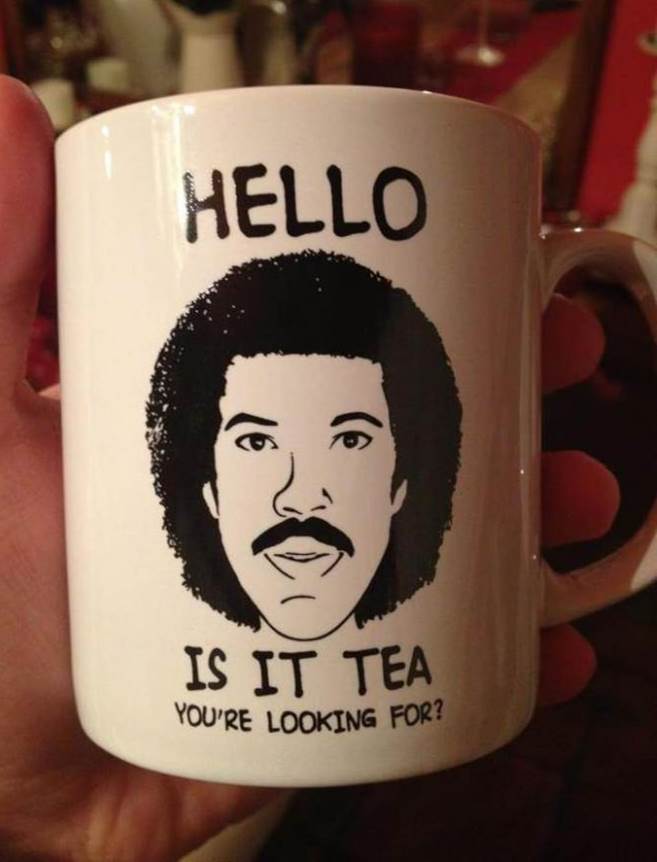
Ice ice baby

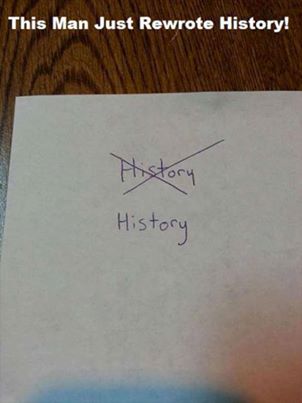
One for the history books …
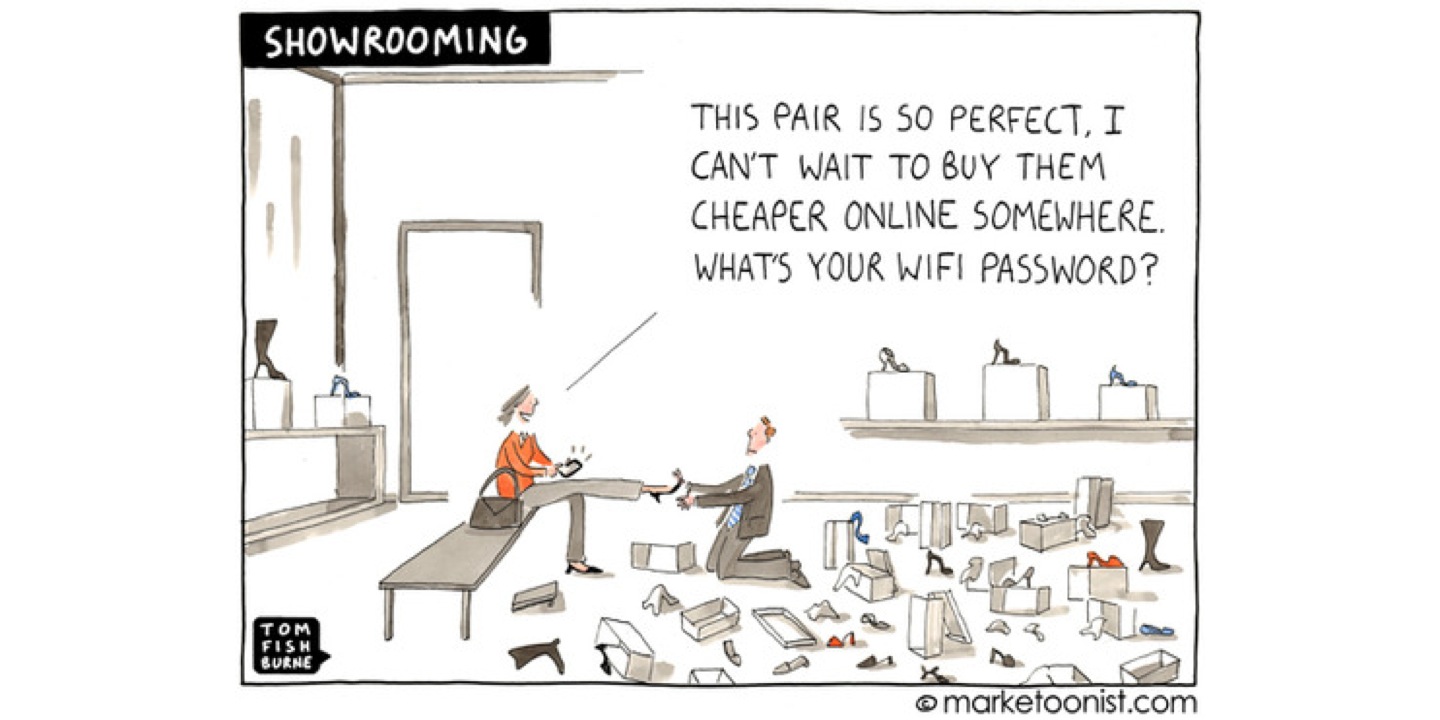
Online offline shopping … the new world
The great debate
Several centuries ago, the Pope decreed that all the Jews had to leave Italy. There was, of course, a huge outcry from the Jewish community, so the Pope offered a deal. He would have a religious debate with a leader of the Jewish community. If the Jewish leader won the debate, the Jews would be permitted to stay in Italy. If the Pope won, the Jews would have to leave.
The Jewish community met and picked an aged Rabbi, Moishe, to represent them in the debate. Rabbi Moishe, however, could not speak Latin and the Pope could not speak Yiddish. So it was decided that this would be a “silent” debate.
On the day of the great debate, the Pope and Rabbi Moishe sat opposite each other for a full minute before the Pope raised his hand and showed three fingers. Rabbi Moishe looked back and raised one finger.
Next, the Pope waved his finger around his head. Rabbi Moishe pointed to the ground where he sat. The Pope then brought out a communion wafer and chalice of wine.
Rabbi Moishe pulled out an apple.
With that, the Pope stood up and said, “I concede the debate. This man has bested me. The Jews can stay.”
Later, the Cardinals gathered around the Pope, asking him what had happened. The Pope said, “First I held up three fingers to represent the Trinity. He responded by holding up one finger to remind me that there was still one God common to both our religions. Then I waved my finger around me to show him that God was all around us. He responded by pointing to the ground to show that God was also right here with us. I pulled out the wine and the wafer to show that God absolves us of our sins. He pulled out an apple to remind me of original sin. He had an answer for everything. What could I do?”
Meanwhile, the Jewish community crowded around Rabbi Moishe, asking what happened. “Well,” said Moishe, “first he said to me, ‘You Jews have three days to get out of here.’ So I said to him, ‘Up yours’. Then he tells me the whole city would be cleared of Jews. So I said to him, ‘Listen here Mr. Pope, the Jews … we stay right here!”
“And then?” asked a woman.
“Who knows?” said Rabbi Moishe. “We broke for lunch.”
TGIF … !
To the irritation of the judge, a man was trying to be excused from jury duty.
“Tell me,” rapped the judge, “Is there any good reason why you cannot serve as a juror in the trial?”
The man replied: “I don’t want to be away from my job that long.”
“Can’t they do without you at work?” demanded the judge.
“Yes,” admitted the juror. “But I don’t want them to realize it.”
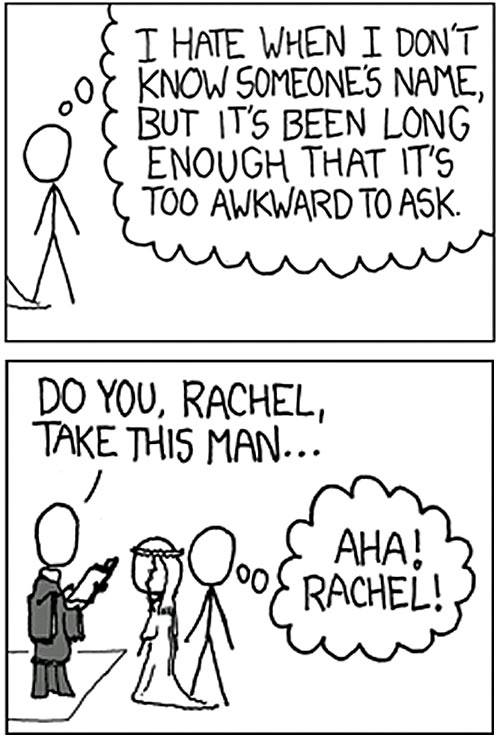
What’s in a name … ?
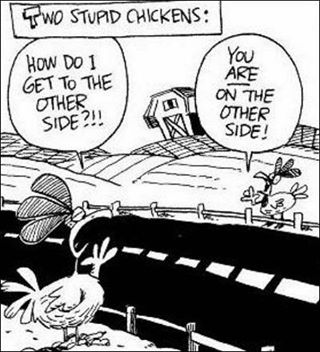
Chicken run
Winter exercise program
Take one Weetbix.
Take an Aero chocolate bar.
Crumble the Aero over the Weetbix.
Voila!
AEROBIX !

