
Ukraine War: West ‘spooked’ by Kremlin and a ‘robust’ response is needed
“There is so much more we need to do. We continue to leave Ukraine to do all the heavy lifting. We need to provide greater weapons systems, and stop having simply daft arguments about whether weapons systems are indeed defensive or offensive.”
Zelenskyy wants Ukraine to be ‘a big Israel.’ Here’s a road map.
Obama says Putin has changed since he was in office
“Part of our complacency grew out of the notion that once the Berlin Wall fell, and Mandela was released, and the world was flat and we had McDonald’s everywhere … and now suddenly, that was it, we were done.”
https://www.youtube.com/watch?v=V4bDuFJuriw
This war is also being fought online
That story of the cold calling captured my imagination. There is indeed a battle underway online too, and Ukraine is winning, in my view. Yes, Russia is losing, and they did this to themselves. Who on Earth will ever want to visit Russia or have anything to do with Russia ever again.

We have heard of many innovative and creative online activities to try help Ukraine. The Jooble story, like the cold calling campaign, is about spreading the truth.

“Twitter to introduce restrictions on Russian government accounts, propaganda. Head of Site Integrity at Twitter Yoel Roth said that Twitter will not “amplify or recommend government accounts belonging to states that limit access to free information and are engaged in armed interstate conflict.” Russia blocked access to Twitter on March 4.”
Let’s not forget the tractors
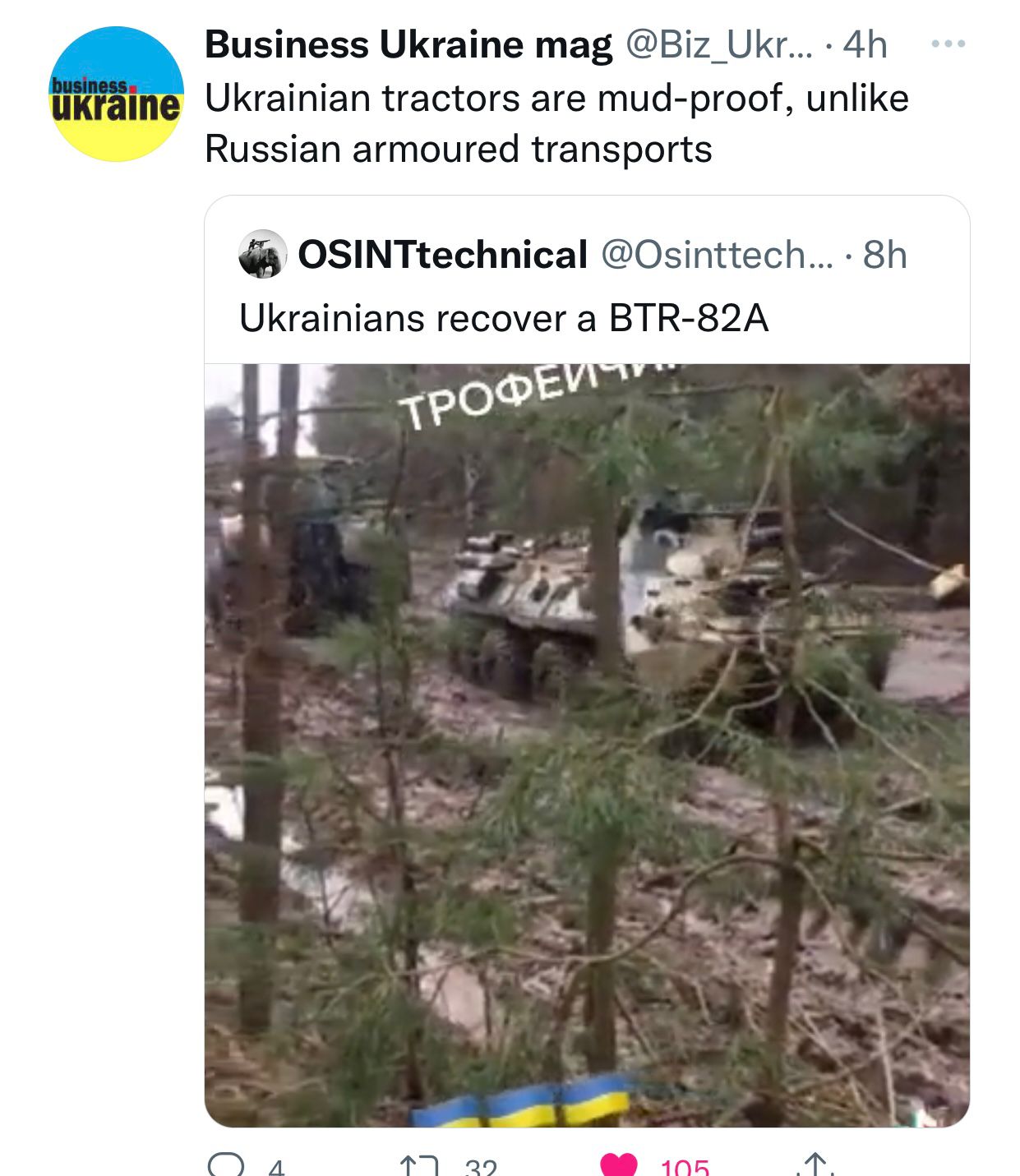
Europe and America are not helping Ukraine because they love Ukraine. They are helping Ukraine because they are afraid of Russia. Ukraine is fighting their war.

You can’t fool all of the people all of the time. These stats are seriously revealing. The truth will come out.


How To Make Sense Of Russia’s War On Ukraine
Putin wants democracy to fail, not only in Ukraine but across the West too, Anne Applebaum writes. “He wants to put so much strain on Western and democratic institutions, especially the European Union and NATO, that they break up. He wants to keep dictators in power wherever he can, in Syria, Venezuela, and Iran. He wants to undermine America, to shrink American influence, to remove the power of the democracy rhetoric that so many people in his part of the world still associate with America. He wants America itself to fail.”
What Vladimir Putin misunderstood about Ukrainians
Before the invasion, did you struggle to understand Ukraine? Could you place it on a map or picture its people? Perhaps it existed on the periphery of your imagination, a bleak suburb of Greater Russia, which Vladimir Putin claims doesn’t really exist. You wouldn’t be alone. Until recently I had little comprehension of the country – and I was born there.
It’s easy to see why Ukraine confuses people. To the uninformed outsider, it confounds all ideas of what makes a nation. Most people are casually bilingual. It contains many histories simultaneously: the Russian, Soviet and Austro-Hungarian empires, Poland, Romania and, of course, Ukraine itself. This lattice of historical narratives has made many in the West feel as though the country is not quite real.
Now people are more clued up. The world has found its hero nation. Its Jewish president, a one-time comedian who matured into a younger, more empathetic Churchill. The elderly women taunting Russian soldiers. The hipsters picking up machine guns. The distraught yet articulate mothers with their sparkling children sheltering underground. The beauty blogger on Instagram bombed in a maternity ward.
Ukrainians have reminded us what freedom means – a word that for many in rich democracies had long ago curdled into platitudes. The resilience of the population has impressed the West and surprised the Kremlin. It shouldn’t have. For the past few years I’ve been trying to unlock the secret of Ukrainian identity by talking to Ukrainians. Through my research project, Arena, based originally at the LSE and now at Johns Hopkins University, I’ve worked with Ukrainian journalists and sociologists to find ways of strengthening democracy. My team has interviewed thousands of adults across the country. Our fieldwork shows that the response to Russia’s invasion has deep roots in Ukrainian history.
https://www.economist.com/1843/2022/04/04/what-vladimir-putin-misunderstood-about-ukrainians
€1bn for Ukraine, €35bn for Russian energy: top EU diplomat calls out funding gap
Perspective

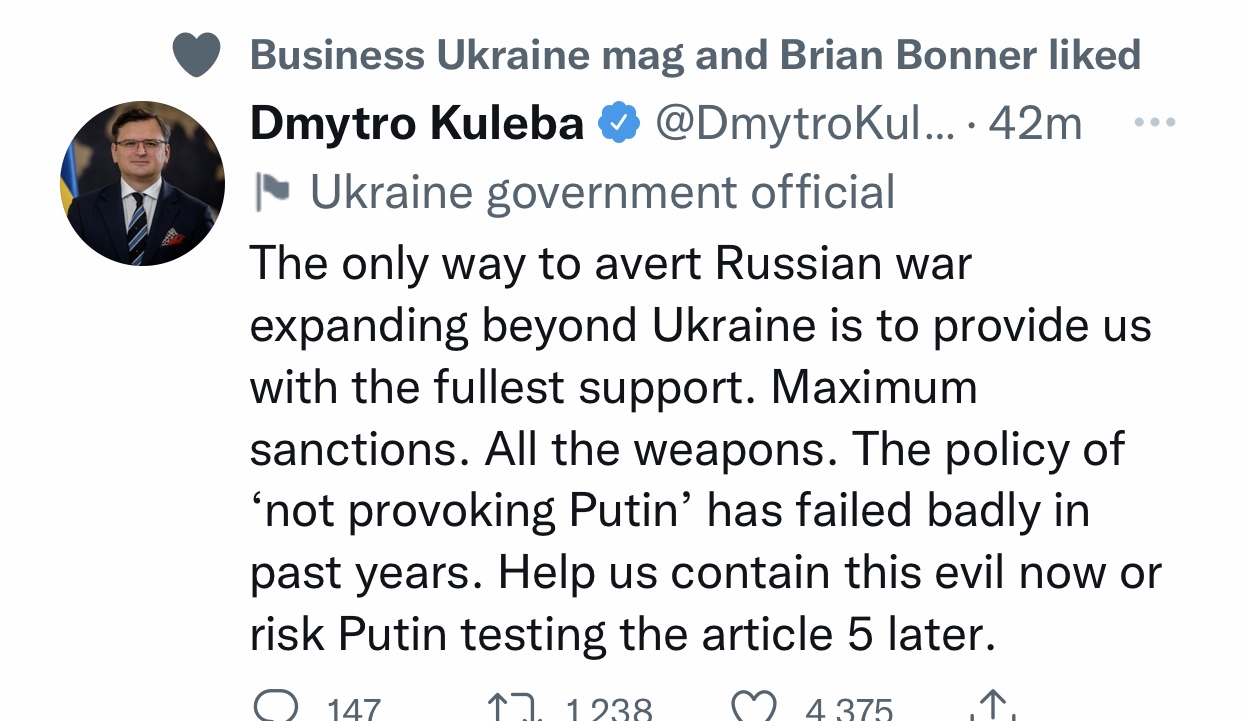
I estimate the chances of WW III starting to be pretty high. At this rate I can’t see Putin slowing down, and he is at war with the free world. Ukraine is fighting on behalf of all democracies. Yes, the West/America is helping but it is the bare minimum, in my view.
‘I’m not scared of war any more’: Death and the Penguin author Andrey Kurkov on life in Kyiv
When asked what we can do to help Ukraine, his first thought is to recommend nonfiction. “Find out more about Ukraine. Read about our history: Serhii Plokhy’s The Gates of Europe; Anne Applebaum’s Red Famine; Timothy Snyder’s Bloodlands. It’s really important to understand the difference between Russia and Ukraine. If you really want to know about Ukraine’s history and why this is happening, read those books.”
 PrettyApt